

What materials are non - woven bouffant caps made of?
Nov 12, 2025
Non-woven bouffant caps are a staple in various industries, offering a practical and hygienic solution for hair containment. As a supplier of these essential caps, I'm often asked about the materials that go into making them. In this blog post, I'll delve into the different materials used in non-woven bouffant caps, their properties, and the benefits they bring to the table.
Understanding Non-woven Fabrics
Before we explore the specific materials, it's important to understand what non-woven fabrics are. Unlike traditional woven fabrics, which are made by interlacing yarns or threads, non-woven fabrics are created by bonding or felting fibers together. This process results in a fabric that is lightweight, breathable, and often more cost-effective than woven alternatives. Non-woven fabrics can be made from a variety of materials, including synthetic polymers, natural fibers, and a combination of both.
Common Materials Used in Non-woven Bouffant Caps
Polypropylene (PP)
Polypropylene is one of the most commonly used materials in non-woven bouffant caps. It is a thermoplastic polymer that is known for its excellent chemical resistance, high melting point, and low density. Polypropylene non-woven fabrics are lightweight, strong, and have good moisture-wicking properties, making them ideal for use in caps that need to keep the wearer's head dry and comfortable.
One of the key advantages of polypropylene is its ability to be easily processed into non-woven fabrics using a variety of methods, such as spunbonding and meltblowing. Spunbonded polypropylene fabrics are made by extruding molten polypropylene through a spinneret to form continuous filaments, which are then laid down on a conveyor belt and bonded together using heat or pressure. Meltblown polypropylene fabrics, on the other hand, are made by blowing hot air through a stream of molten polypropylene to create fine fibers that are randomly deposited on a collector.
Polypropylene non-woven bouffant caps are widely used in industries such as food processing, healthcare, and electronics manufacturing, where hygiene and contamination control are of utmost importance. They are also commonly used in beauty salons, laboratories, and cleanrooms.
Polyester
Polyester is another popular material used in non-woven bouffant caps. It is a synthetic polymer that is known for its high strength, durability, and resistance to wrinkles and shrinking. Polyester non-woven fabrics are often used in caps that need to withstand repeated use and washing, as they are less likely to lose their shape or integrity over time.
Like polypropylene, polyester can be processed into non-woven fabrics using a variety of methods, including spunbonding and needle punching. Spunbonded polyester fabrics are made in a similar way to spunbonded polypropylene fabrics, by extruding molten polyester through a spinneret to form continuous filaments, which are then bonded together using heat or pressure. Needle punched polyester fabrics, on the other hand, are made by passing a web of polyester fibers through a series of barbed needles, which entangle the fibers together to form a strong and durable fabric.
Polyester non-woven bouffant caps are commonly used in industries such as automotive manufacturing, construction, and agriculture, where workers need to protect their hair from dust, debris, and other contaminants. They are also used in some healthcare settings, particularly in situations where a more durable and long-lasting cap is required.
Rayon
Rayon is a natural fiber that is made from cellulose, which is derived from wood pulp or cotton linters. It is a soft, absorbent, and breathable fiber that is often used in non-woven bouffant caps to provide a comfortable and hygienic wearing experience. Rayon non-woven fabrics are typically made by wet-laid or dry-laid processes, which involve dispersing the rayon fibers in a liquid or air medium and then forming them into a web using a variety of techniques, such as carding, air-laying, or wet-laying.
One of the key advantages of rayon is its ability to absorb moisture, which makes it ideal for use in caps that need to keep the wearer's head dry and comfortable. Rayon non-woven bouffant caps are also biodegradable and environmentally friendly, making them a popular choice for industries that are looking to reduce their environmental impact.
Rayon non-woven bouffant caps are commonly used in industries such as healthcare, beauty, and food service, where comfort and hygiene are of utmost importance. They are also used in some fashion applications, such as bridal veils and hair accessories.
Blended Materials
In addition to using single materials, non-woven bouffant caps can also be made from blended materials, which combine the properties of two or more different fibers. Blended materials can offer a range of benefits, such as improved strength, durability, and comfort, as well as enhanced moisture-wicking and antibacterial properties.

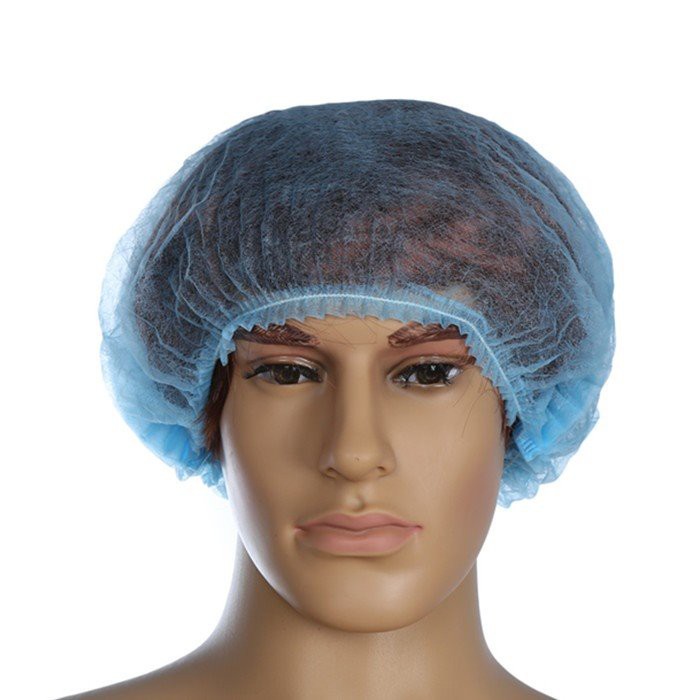
One common blend used in non-woven bouffant caps is a combination of polypropylene and polyester. This blend combines the lightweight and breathable properties of polypropylene with the strength and durability of polyester, resulting in a cap that is both comfortable and long-lasting. Another common blend is a combination of rayon and polyester, which combines the absorbent and breathable properties of rayon with the strength and durability of polyester, resulting in a cap that is both comfortable and hygienic.
Blended non-woven bouffant caps are commonly used in industries such as healthcare, food processing, and electronics manufacturing, where a combination of properties is required to meet the specific needs of the application.
Benefits of Non-woven Bouffant Caps
Now that we've explored the different materials used in non-woven bouffant caps, let's take a look at some of the benefits they offer:
Hygiene
Non-woven bouffant caps are designed to provide a barrier between the wearer's hair and the surrounding environment, helping to prevent the spread of hair, dandruff, and other contaminants. They are often used in industries such as healthcare, food processing, and electronics manufacturing, where hygiene and contamination control are of utmost importance.
Comfort
Non-woven bouffant caps are typically made from lightweight and breathable materials, such as polypropylene, polyester, and rayon, which make them comfortable to wear for extended periods of time. They are also available in a variety of sizes and styles to ensure a proper fit, which further enhances comfort.
Cost-effectiveness
Non-woven bouffant caps are generally more cost-effective than traditional woven caps, as they are made from less expensive materials and can be produced using high-speed manufacturing processes. This makes them a popular choice for industries that need to provide caps to a large number of workers on a regular basis.
Versatility
Non-woven bouffant caps are available in a variety of colors, sizes, and styles to meet the specific needs of different industries and applications. They can be used in a wide range of settings, including healthcare facilities, food processing plants, electronics manufacturing cleanrooms, beauty salons, and laboratories.
Our Product Range
As a supplier of non-woven bouffant caps, we offer a wide range of products to meet the diverse needs of our customers. Our caps are made from high-quality materials and are available in a variety of colors, sizes, and styles to ensure a proper fit and maximum comfort.
In addition to our standard non-woven bouffant caps, we also offer a range of specialty caps, such as Women Shower Cap, Non-woven Astronaut Cap, and Non-woven Nurse Cap and Clip Cap. These caps are designed to meet the specific needs of different industries and applications, and are available in a variety of colors and styles to ensure a proper fit and maximum comfort.
Contact Us for Procurement
If you're interested in purchasing non-woven bouffant caps for your business, we'd love to hear from you. Our team of experts can help you choose the right caps for your specific needs and provide you with a competitive quote. We offer fast turnaround times, excellent customer service, and a commitment to quality that you can trust.
To learn more about our products and services, or to request a quote, please contact us today. We look forward to working with you!
References
- "Non-woven Fabrics: Principles, Production, and Applications" by Richard K. Russell and W. Stephen Porter
- "Handbook of Nonwovens" edited by S. Ramakrishna and K. K. Shalaby
- "The Science and Technology of Nonwovens" by Patrick K. Chatterjee