

What is the water absorption capacity of non - woven shoe covers?
May 15, 2025
As a supplier of Non - Woven Shoe Covers, I've often been asked about the water absorption capacity of these essential protective items. In this blog post, I'll delve into the science behind the water absorption of non - woven shoe covers, explore its influencing factors, and explain its importance in different applications.
The Basics of Non - Woven Materials
Non - woven fabrics are made by bonding or interlocking fibers together rather than weaving or knitting them. These fibers can be synthetic, such as polypropylene or polyester, or natural, like cellulose. The manufacturing process of non - woven fabrics gives them unique properties, including varying degrees of water absorption.
The water absorption capacity of a non - woven fabric depends on the type of fibers used, the density of the fabric, and the manufacturing process. For example, cellulose - based non - woven fabrics generally have a higher water absorption capacity compared to synthetic ones because cellulose fibers are hydrophilic, meaning they attract water. On the other hand, synthetic fibers like polypropylene are hydrophobic, which means they repel water.
Measuring Water Absorption Capacity
There are several methods to measure the water absorption capacity of non - woven shoe covers. One common method is the gravimetric method. In this method, a sample of the non - woven shoe cover is weighed dry. Then, it is immersed in water for a specific period, usually until it reaches saturation. After that, the excess water is removed by gently squeezing or using a centrifuge, and the sample is weighed again. The difference in weight before and after immersion represents the amount of water absorbed by the sample.

Another method is the drip method. In this method, water is dropped onto the surface of the non - woven shoe cover at a constant rate, and the time it takes for the water to be absorbed or to start dripping off is measured. This method can give an indication of the surface wettability and the initial water absorption rate of the non - woven material.

Influencing Factors on Water Absorption Capacity
- Fiber Type: As mentioned earlier, the type of fiber used in the non - woven fabric has a significant impact on its water absorption capacity. Cellulose fibers, such as those derived from wood pulp or cotton, can absorb a large amount of water due to their hydrophilic nature. Synthetic fibers, like polypropylene and polyester, have low water absorption because they are hydrophobic. However, some synthetic fibers can be treated to increase their water - absorbing properties.
- Fabric Density: The density of the non - woven fabric also affects its water absorption capacity. A denser fabric has less space between the fibers, which can limit the amount of water that can be absorbed. Conversely, a less dense fabric has more voids between the fibers, allowing more water to be held within the fabric structure.
- Thickness: Thicker non - woven shoe covers generally have a higher water absorption capacity than thinner ones. This is because there is more material available to absorb and hold water. However, increasing the thickness also increases the cost and may affect the comfort and flexibility of the shoe cover.
- Surface Treatment: Surface treatments can be applied to non - woven shoe covers to modify their water absorption properties. For example, a hydrophilic treatment can be applied to a hydrophobic synthetic fabric to increase its water absorption. Conversely, a water - repellent treatment can be applied to reduce the water absorption of a hydrophilic fabric.
Importance of Water Absorption Capacity in Different Applications
- Cleanroom Environments: In cleanroom environments, non - woven shoe covers are used to prevent contamination. A certain level of water absorption may be required to absorb any spills or moisture on the floor, preventing it from being tracked around the cleanroom. However, the water absorption should not be too high, as excessive moisture can promote the growth of bacteria and other contaminants. Our Disposable Non - woven Shoe Covers are designed to meet the specific requirements of cleanroom applications, with an optimal balance of water absorption and contamination prevention.
- Medical Settings: In medical settings, non - woven shoe covers are used to protect healthcare workers from exposure to bodily fluids and other contaminants. High water absorption capacity is crucial in these applications to quickly absorb any spills or splashes, reducing the risk of cross - contamination. Our High Boot Shoe Cover provides excellent protection and water absorption, ensuring the safety of medical personnel.
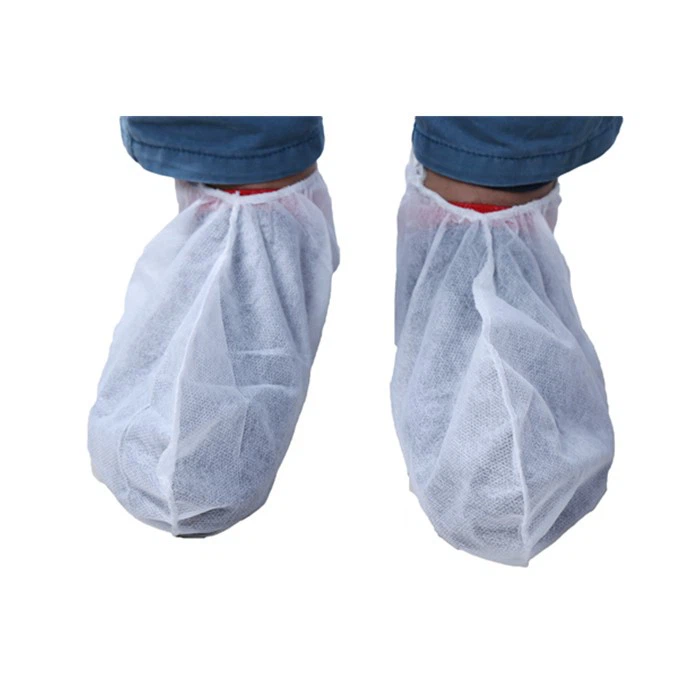
- Industrial Workplaces: In industrial workplaces, non - woven shoe covers are used to protect workers from chemicals, oils, and other hazardous substances. The water absorption capacity of the shoe cover can play a role in absorbing any liquid spills, preventing them from seeping into the worker's shoes. Our Non - Woven Shoe Cover is designed to withstand the harsh conditions of industrial environments, with appropriate water absorption properties.
Choosing the Right Non - Woven Shoe Cover Based on Water Absorption
When choosing non - woven shoe covers, it's important to consider the specific application and the required water absorption capacity. For applications where moisture needs to be quickly absorbed, such as in medical settings, shoe covers made from hydrophilic materials or with a high water absorption treatment are recommended. For applications where water repellency is more important, such as in cleanrooms where excessive moisture can cause contamination, hydrophobic or water - repellent shoe covers may be more suitable.
It's also important to consider other factors such as comfort, durability, and cost. A shoe cover with high water absorption capacity may be more expensive or less comfortable to wear if it is too thick or heavy. Therefore, a balance needs to be struck between the water absorption capacity and other performance characteristics.
Conclusion
The water absorption capacity of non - woven shoe covers is an important property that depends on various factors such as fiber type, fabric density, thickness, and surface treatment. Understanding the water absorption capacity is crucial for choosing the right non - woven shoe cover for different applications, whether it's in cleanroom environments, medical settings, or industrial workplaces.
As a supplier of non - woven shoe covers, we are committed to providing high - quality products that meet the diverse needs of our customers. If you are interested in learning more about our non - woven shoe covers or have specific requirements regarding water absorption capacity, please feel free to contact us for a detailed discussion and procurement negotiation. We look forward to serving you and helping you find the perfect non - woven shoe cover solution for your needs.

References
- ASTM International. (20XX). Standard Test Methods for Water Absorption of Textiles. ASTM D570 - XX.
- Smith, J. (20XX). Non - woven Materials: Properties and Applications. Textile Science Journal, 15(2), 34 - 45.
- Brown, A. (20XX). The Role of Water Absorption in Protective Clothing. Journal of Occupational Safety and Health, 22(3), 67 - 78.