

What is the density of non - woven sleeve covers?
Oct 07, 2025
Hey there! As a supplier of Non-woven Sleeve Covers, I often get asked about the density of these nifty products. So, let's dive right in and explore what the density of non-woven sleeve covers really means.

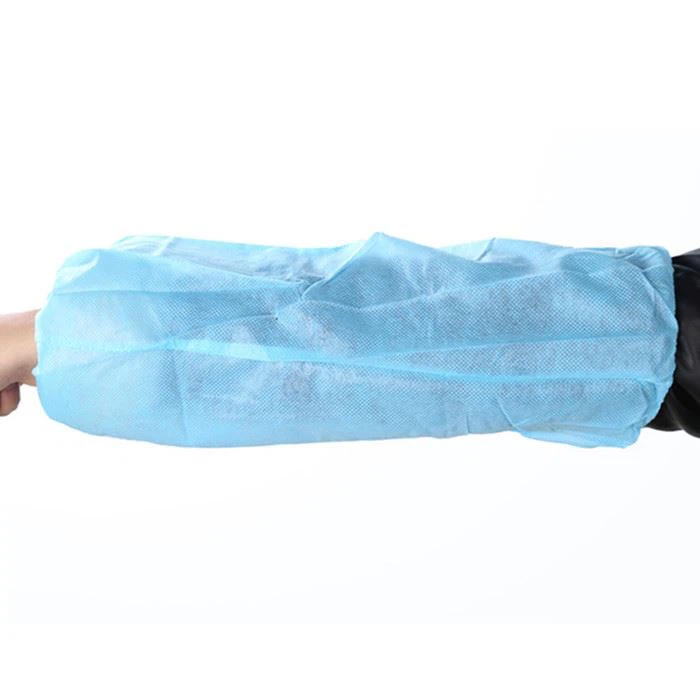
First off, what are non-woven sleeve covers? Non-woven sleeve covers are disposable protective sleeves that are widely used in various industries. They're great for keeping your arms clean and protected from dirt, dust, and other contaminants. You can find them in places like food processing plants, medical facilities, and even in some manufacturing settings. If you're interested in checking out our range of Non-woven Sleeve Covers, you can click Non-woven Sleeve Cover.
Now, let's talk about density. In the world of non-woven materials, density refers to how closely packed the fibers are in the fabric. It's usually measured in grams per square meter (gsm). A higher density means that there are more fibers packed into a given area, which can have a few different impacts on the sleeve cover.
One of the main things that density affects is the strength and durability of the sleeve cover. A higher density non-woven sleeve cover is generally stronger and more resistant to tearing. This is super important in industries where the sleeves might be subjected to a lot of wear and tear. For example, in a manufacturing plant where workers are handling rough materials or using tools, a high-density sleeve cover will hold up better and provide longer-lasting protection.
On the other hand, a lower density sleeve cover might be more lightweight and breathable. This can be a big advantage in situations where comfort is key. In a food processing plant, for instance, workers might be wearing the sleeve covers for long periods of time. A lower density sleeve cover will allow their skin to breathe, reducing the chances of sweating and discomfort.
Another factor that density can influence is the level of protection. A higher density sleeve cover can offer better protection against liquids and particles. If you're working in a medical environment where you need to protect against bodily fluids or in a laboratory where you're handling chemicals, a high-density sleeve cover will be your best bet. It can act as a more effective barrier, reducing the risk of contamination.
But how do you choose the right density for your needs? Well, it really depends on what you're using the sleeve covers for. If you're in an industry where strength and protection are the top priorities, then a higher density (say, 60 gsm or above) is probably the way to go. However, if comfort and breathability are more important, then a lower density (around 30 - 40 gsm) might be a better choice.
It's also worth noting that different manufacturing processes can affect the density and properties of non-woven sleeve covers. There are several methods for making non-woven fabrics, such as spunbond, meltblown, and needle punching. Each of these processes can result in a different density and texture. For example, spunbond non-woven fabrics are often known for their good strength and relatively lower cost, while meltblown fabrics can have a very high density and excellent filtration properties.
Now, aside from non-woven sleeve covers, we also offer PE Sleeve Cover and Disposable Polyethylene Sleeve Cover. These are made from polyethylene, which has its own set of properties. Polyethylene sleeve covers are often very waterproof and can be a great option for applications where you need to protect against liquids. They're also usually quite lightweight and flexible.
So, whether you're looking for a high-density non-woven sleeve cover for maximum protection or a lower density one for comfort, we've got you covered. Our team is always happy to help you figure out the best option for your specific requirements. If you're interested in purchasing our sleeve covers or just want to learn more, don't hesitate to get in touch. We're here to make sure you get the right product for your needs.
In conclusion, understanding the density of non-woven sleeve covers is crucial when it comes to choosing the right product for your industry. It can affect everything from strength and durability to comfort and protection. By considering your specific needs and the properties of different densities, you can make an informed decision. And if you have any questions along the way, we're just a message away. Let's work together to find the perfect sleeve cover solution for you!
References:
- General knowledge of non-woven materials and disposable protective products.
- Industry standards and practices related to sleeve cover manufacturing and usage.