

Are non - woven bouffant caps resistant to abrasion?
Oct 07, 2025
As a supplier of non - woven bouffant caps, I often get asked about the abrasion resistance of these products. Abrasion resistance is a crucial factor, especially in industries where the caps are subjected to constant rubbing or friction. In this blog, I'll delve into the topic of whether non - woven bouffant caps are resistant to abrasion, exploring the materials, manufacturing processes, and practical applications.
Understanding Non - woven Bouffant Caps
Non - woven bouffant caps are made from non - woven fabrics. Unlike traditional woven fabrics, which are created by interlacing yarns, non - woven fabrics are formed by bonding or felting fibers together. This process results in a material that is lightweight, breathable, and cost - effective. Non - woven bouffant caps are commonly used in various industries, including food processing, healthcare, electronics manufacturing, and beauty salons.
Factors Affecting Abrasion Resistance
Material Composition
The type of fibers used in the non - woven fabric plays a significant role in determining its abrasion resistance. Polypropylene is one of the most commonly used fibers in non - woven bouffant caps. It is known for its good chemical resistance, low cost, and relatively high strength. However, its abrasion resistance can vary depending on the quality and denier (a unit of measure for the linear mass density of fibers) of the polypropylene fibers.
Finer denier fibers may provide a softer feel but may be more prone to abrasion compared to coarser denier fibers. Some manufacturers may also blend different types of fibers to enhance the overall performance of the non - woven fabric. For example, adding a small amount of polyester fibers can improve the abrasion resistance and durability of the cap.
Manufacturing Process
The way the non - woven fabric is manufactured also affects its abrasion resistance. There are several methods for producing non - woven fabrics, such as spunbonding, meltblowing, and thermal bonding. Spunbonded non - woven fabrics generally have better abrasion resistance compared to meltblown fabrics. This is because spunbonding creates a more continuous and stronger fiber structure.
Thermal bonding, which uses heat to bond the fibers together, can also enhance the abrasion resistance of the non - woven fabric. The bonding process ensures that the fibers are firmly held together, reducing the likelihood of fiber shedding and abrasion.
Thickness and Density
The thickness and density of the non - woven fabric are important factors in abrasion resistance. Thicker and denser non - woven fabrics tend to be more resistant to abrasion. A thicker fabric provides more layers of fibers to absorb the frictional forces, while a higher density means that the fibers are more closely packed together, making it more difficult for the fabric to be worn away.
Testing Abrasion Resistance
To determine the abrasion resistance of non - woven bouffant caps, various testing methods can be used. One common method is the Martindale abrasion test. In this test, a sample of the non - woven fabric is rubbed against a standard abrasive material under a specified load and number of cycles. The amount of wear and tear on the fabric is then evaluated, usually by measuring the change in mass or appearance of the sample.
Another method is the Taber abrasion test, which uses a rotating abrasive wheel to rub against the fabric. This test can provide information about the fabric's resistance to different types of abrasion, such as rotary and linear abrasion.
Practical Applications and Abrasion Resistance
Food Processing Industry
In the food processing industry, non - woven bouffant caps are worn by workers to prevent hair from falling into the food products. These caps may come into contact with various surfaces, such as conveyor belts, equipment, and packaging materials. A cap with good abrasion resistance is essential to ensure that it does not shed fibers into the food, which could pose a contamination risk.
Healthcare Industry
In healthcare settings, non - woven bouffant caps are worn by medical staff during surgeries, patient care, and other procedures. The caps may rub against surgical gowns, masks, and other equipment. Abrasion - resistant caps are important to maintain their integrity and prevent the release of particles that could potentially cause infections.
Electronics Manufacturing
In electronics manufacturing, non - woven bouffant caps are used to prevent static electricity and particle contamination. The caps may be in contact with sensitive electronic components and cleanroom surfaces. A cap with high abrasion resistance is necessary to avoid scratching the components and to maintain the cleanliness of the manufacturing environment.
Comparing with Other Disposable Headwear
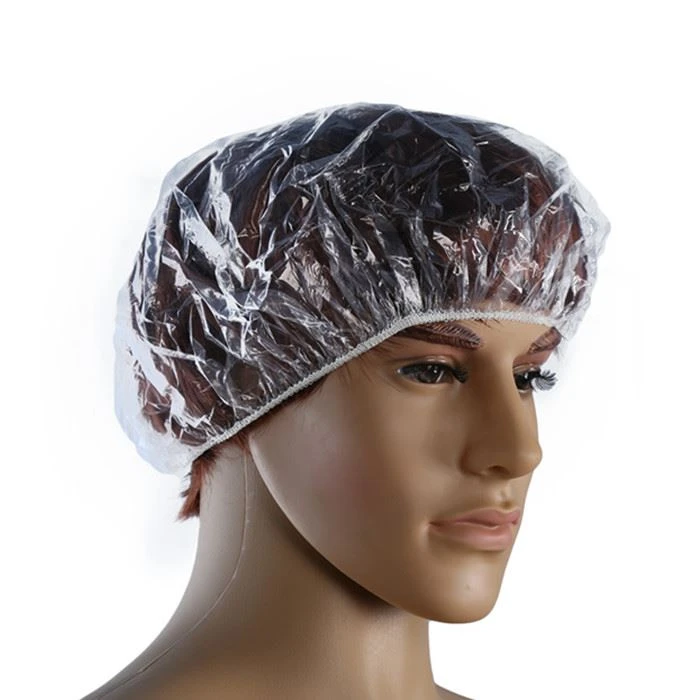
When considering the abrasion resistance of non - woven bouffant caps, it's interesting to compare them with other types of disposable headwear. For example, Women Shower Cap is mainly designed for personal use during showers and may not require high abrasion resistance. These caps are typically made from thin plastic or non - woven materials with a focus on waterproofing and comfort.
Round Nylon Hairnet and Nylon Hairnets are made from nylon fibers. Nylon is known for its high strength and abrasion resistance. However, non - woven bouffant caps can offer a more cost - effective alternative, especially for large - scale applications.
Conclusion
In conclusion, non - woven bouffant caps can have varying degrees of abrasion resistance depending on the material composition, manufacturing process, thickness, and density. While they may not be as abrasion - resistant as some nylon hairnets, they can still provide adequate protection in many industries.
When choosing non - woven bouffant caps, it's important to consider the specific requirements of your application. If your workers will be exposed to high levels of abrasion, you may want to opt for caps made from high - quality materials with a thicker and denser non - woven fabric.

If you're interested in purchasing non - woven bouffant caps or have any questions about their abrasion resistance, feel free to contact us for more information and to discuss your specific needs. We're here to help you find the best solution for your business.
References
- ASTM International. (20XX). Standard Test Methods for Abrasion Resistance of Textile Fabrics (Martindale Abrasion Tester Method).
- ISO. (20XX). Textiles - Determination of abrasion resistance - Taber abrasion tester method.
- Manufacturers' technical data sheets on non - woven fabrics.