

Are non - woven sleeve covers resistant to mold?
Oct 14, 2025
As a supplier of Non-woven Sleeve Covers, I often get asked various questions from customers. One of the most frequent queries is whether non-woven sleeve covers are resistant to mold. In this blog, I'll delve into this topic, exploring the factors that affect mold resistance in non-woven sleeve covers, and providing some insights based on our industry knowledge and experience.
Understanding Non-woven Sleeve Covers
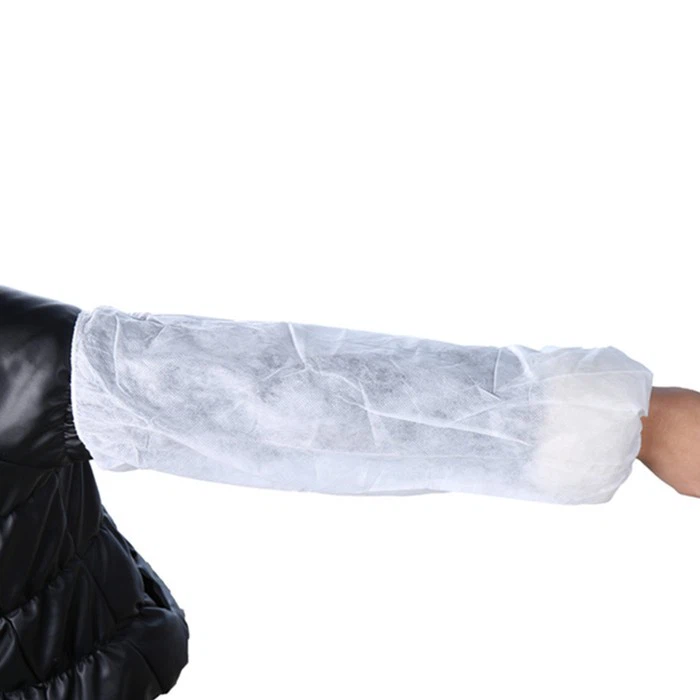
Non-woven sleeve covers are widely used in many industries, including food processing, healthcare, electronics manufacturing, and cleanroom environments. They are designed to provide a protective barrier for the arms, preventing contamination from dust, dirt, and other particles. There are different types of non-woven sleeve covers, such as PP Nonwoven Sleeve Cover, which are made from polypropylene fibers, and other variants that may use different materials or blends.
The non-woven fabric used in these sleeve covers is created through a process that involves bonding or interlocking fibers together, rather than weaving them. This results in a material that is lightweight, breathable, and cost - effective. However, the properties of the non-woven fabric can vary depending on the manufacturing process, the type of fibers used, and any additional treatments applied.
What Causes Mold Growth?
Mold is a type of fungus that thrives in warm, damp, and dark environments. It reproduces by releasing spores into the air, which can settle on various surfaces and start growing if the conditions are right. The key factors that contribute to mold growth are moisture, temperature, and a suitable food source.
Moisture is perhaps the most critical factor. When non-woven sleeve covers are exposed to high humidity levels or come into contact with liquids, they can absorb moisture. If this moisture is not dried out quickly, it creates an ideal environment for mold to grow. Temperature also plays a role, as mold typically grows best in temperatures between 77°F and 86°F (25°C and 30°C). Finally, non-woven fabrics can provide a food source for mold, as they are made of organic or synthetic fibers that can be broken down by the mold's enzymes.
Mold Resistance of Non-woven Sleeve Covers
The mold resistance of non-woven sleeve covers depends on several factors:
Material Composition
The type of fibers used in the non-woven fabric significantly impacts its mold resistance. Synthetic fibers like polypropylene are generally more resistant to mold compared to natural fibers. Polypropylene is a hydrophobic material, which means it repels water. This property reduces the amount of moisture that the sleeve cover can absorb, making it less likely for mold to grow. For example, PP Nonwoven Sleeve Cover made from high - quality polypropylene fibers have a relatively high level of mold resistance.
On the other hand, non-woven fabrics made from natural fibers such as cotton or rayon are more prone to mold growth. These fibers are hydrophilic, meaning they absorb water easily. Once they are wet, they can retain moisture for a long time, providing an excellent breeding ground for mold.
Manufacturing Process
The manufacturing process can also affect mold resistance. Some non-woven fabrics are treated with anti - microbial agents during the production process. These agents can inhibit the growth of mold and other microorganisms. For instance, a non-woven sleeve cover that has been treated with a silver - based anti - microbial agent can have enhanced mold resistance. The silver ions can disrupt the cell membranes of mold spores, preventing them from growing and reproducing.
Additionally, the density and porosity of the non-woven fabric play a role. A denser fabric with lower porosity may be less likely to absorb moisture, reducing the risk of mold growth. However, it's important to balance density with breathability, especially for applications where comfort is a concern.
Storage and Usage Conditions
How non-woven sleeve covers are stored and used can have a significant impact on their mold resistance. If they are stored in a damp, poorly ventilated area, the risk of mold growth increases. It's essential to store these sleeve covers in a dry, cool, and well - ventilated place.
During use, if the sleeve covers are exposed to excessive moisture, such as in a wet work environment or when they come into contact with liquids, they should be replaced or dried promptly. For example, in a food processing facility where there is a lot of water and steam, workers should be trained to change their sleeve covers regularly to prevent mold growth.
Testing Mold Resistance
To determine the mold resistance of non-woven sleeve covers, various testing methods can be used. One common method is the ASTM G21 standard test. This test involves exposing the non-woven fabric samples to a mixture of mold spores in a controlled environment for a specific period. After the exposure, the samples are evaluated for mold growth based on a rating scale.

Another approach is to conduct in - house testing. At our company, we perform regular quality control checks on our Non-woven Sleeve Cover products. We simulate real - world conditions by exposing the sleeve covers to high humidity and moisture and then visually inspect them for signs of mold growth over time. This allows us to ensure that our products meet the required standards of mold resistance.
Benefits of Mold - Resistant Non-woven Sleeve Covers
Using mold - resistant non-woven sleeve covers offers several benefits:
Hygiene and Safety
In industries such as healthcare and food processing, maintaining a high level of hygiene is crucial. Mold - resistant sleeve covers help prevent the growth of harmful microorganisms, reducing the risk of cross - contamination. For example, in a hospital setting, mold on sleeve covers could potentially transfer to patients, leading to infections.
Durability
Mold can weaken the structure of non-woven fabrics over time, causing them to tear or break more easily. By using mold - resistant sleeve covers, their lifespan can be extended, reducing the frequency of replacement and saving costs in the long run.
Reputation
For businesses, providing high - quality, mold - resistant products can enhance their reputation. Customers are more likely to trust a supplier that offers products that meet strict hygiene and quality standards.
Conclusion
In conclusion, non-woven sleeve covers can have varying levels of mold resistance depending on factors such as material composition, manufacturing process, and storage and usage conditions. Synthetic fibers like polypropylene generally offer better mold resistance compared to natural fibers. Treating the non-woven fabric with anti - microbial agents during manufacturing can further enhance its mold - resistant properties.
At our company, we are committed to providing high - quality Non-woven Sleeve Cover products that meet the highest standards of mold resistance. We use advanced manufacturing techniques and conduct rigorous quality control tests to ensure that our sleeve covers are suitable for a wide range of applications.
If you are interested in learning more about our non-woven sleeve covers or have specific requirements for your business, we encourage you to reach out to us. We are always ready to discuss your needs and provide you with the best solutions. Whether you need PE Sleeve Cover for a specific application or PP Nonwoven Sleeve Cover with enhanced mold resistance, we are here to assist you. Let's start a conversation about your procurement needs and find the perfect non-woven sleeve covers for your business.
References
- ASTM International. (n.d.). ASTM G21 - 15 Standard Practice for Determining Resistance of Synthetic Polymeric Materials to Fungi.
- Textile Institute. (2018). Handbook of Nonwoven Fabrics. Woodhead Publishing.