

Do nylon hairnets have a smooth surface?
Jun 25, 2025
Nylon hairnets are a staple in various industries, from food service to healthcare and even fashion. One common question that often arises is whether nylon hairnets have a smooth surface. As a supplier of high - quality nylon hairnets, I'm here to delve into this topic in detail.
The Nature of Nylon Material
To understand whether nylon hairnets have a smooth surface, we first need to look at the characteristics of nylon itself. Nylon is a synthetic polymer known for its strength, durability, and flexibility. It is created through a chemical process that results in long, linear chains of molecules. These molecular chains give nylon its unique properties.
The manufacturing process of nylon involves extruding the polymer into fibers. During this extrusion, the fibers can be engineered to have different surface textures. For hairnets, the goal is often to create a balance between functionality and comfort. A smooth surface can offer several advantages.
Advantages of a Smooth Surface
- Comfort: A smooth - surfaced nylon hairnet is more comfortable to wear. When it comes into contact with the hair and scalp, there is less friction. This means that the wearer is less likely to experience irritation or discomfort, even when wearing the hairnet for extended periods. For instance, in a food service environment where employees may need to wear hairnets throughout an entire shift, a smooth - surfaced hairnet can make the work experience more pleasant.
- Hygiene: A smooth surface is easier to clean. In industries where hygiene is of utmost importance, such as healthcare, any crevices or rough areas on a hairnet could potentially trap dirt, bacteria, or other contaminants. A smooth - surfaced nylon hairnet can be easily wiped clean or washed, ensuring that it meets the strict hygiene standards of these industries.
- Less Snagging: Smooth hairnets are less likely to snag on hair. This is crucial for both the wearer's convenience and the integrity of the hairnet itself. When a hairnet snags, it can pull out hair, which can be painful for the wearer, and it can also damage the hairnet, reducing its lifespan.
Manufacturing Techniques for Smooth Surfaces
At our company, we use advanced manufacturing techniques to ensure that our nylon hairnets have a smooth surface. We start with high - quality nylon raw materials. The extrusion process is carefully controlled to produce fibers with a consistent diameter and a smooth outer layer. After the fibers are formed, they are woven into hairnets using precision machinery. This weaving process is designed to create a uniform and smooth structure.
We also conduct rigorous quality control checks. Each hairnet is inspected for any surface irregularities, such as rough edges or uneven weaving. Only those hairnets that meet our strict quality standards are packaged and sent out to our customers.
Comparing with Other Types of Hair Coverings
It's interesting to compare nylon hairnets with other types of hair coverings in terms of surface smoothness. For example, Polypropylene Nurse Cap are also commonly used in the healthcare industry. While polypropylene caps can be lightweight and disposable, they may not always have the same level of smoothness as nylon hairnets. Polypropylene has different physical properties compared to nylon, and its surface may be more prone to static buildup, which can attract dust and make the cap feel less smooth.
Women Shower Cap are another type of hair covering. These caps are often made from a variety of materials, including plastic and rubberized fabrics. While they are designed to keep hair dry during showers, their surface texture may vary widely. Some shower caps may have a smooth surface, but others may have a more textured or patterned design for aesthetic purposes. In contrast, our nylon hairnets are focused on functionality and smoothness.
Non - woven Doctor Cap are widely used in medical settings. Non - woven materials are made by bonding fibers together rather than weaving them. While non - woven doctor caps can be cost - effective and disposable, they may not offer the same smoothness as nylon hairnets. The non - woven structure can sometimes create a slightly rough surface, which may not be as comfortable for long - term wear.
Testing the Smoothness of Nylon Hairnets
We regularly test the smoothness of our nylon hairnets using various methods. One common test is the tactile evaluation, where our quality control team manually feels the hairnets to detect any rough areas. We also use surface profilometry, a technique that measures the surface topography of the hairnet at a microscopic level. This allows us to quantify the smoothness and ensure that it meets our specifications.
Real - World Applications and Feedback
In the real world, our smooth - surfaced nylon hairnets have received positive feedback from customers in different industries. In the food processing industry, customers have reported that our hairnets are comfortable to wear and easy to keep clean. In the beauty industry, stylists appreciate the fact that our hairnets don't snag on their clients' hair.
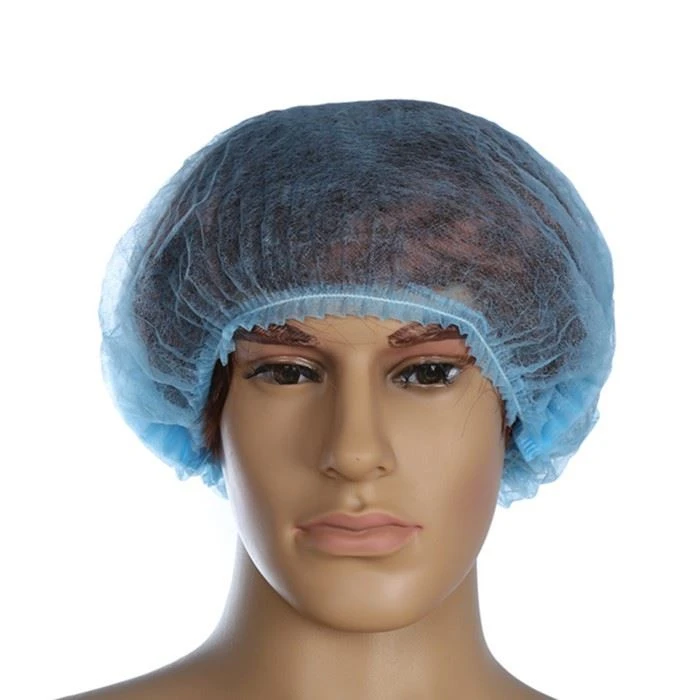

We also have customers in the manufacturing sector who use our hairnets to prevent hair from falling into their products. The smooth surface of our hairnets ensures that there is no interference with the manufacturing process, and the hairnets can withstand the rigors of the work environment.
Conclusion
In conclusion, nylon hairnets can indeed have a smooth surface, and this smoothness offers numerous benefits in terms of comfort, hygiene, and functionality. At our company, we are committed to providing high - quality nylon hairnets with a smooth surface to meet the diverse needs of our customers. Whether you are in the food service, healthcare, beauty, or manufacturing industry, our nylon hairnets can be a reliable choice.
If you are interested in learning more about our nylon hairnets or would like to discuss a potential purchase, please feel free to reach out to us. We are always happy to assist you in finding the right hairnet solutions for your specific requirements.
References
- "Polymer Science and Technology" by Charles A. Daniels
- "Textile Manufacturing Processes" by John Smith
- Industry reports on hairnet usage in various sectors.