

Do non - woven hoods have a good drape?
Jun 11, 2025
Hey there! As a supplier of non - woven hoods, I often get asked if these non - woven hoods have a good drape. Well, let's dig into this topic and find out.
First off, what do we mean by "drape"? In the world of fabrics and head coverings, drape refers to how a material falls and hangs. A good drape means the material flows smoothly, conforms to the shape it's covering without being too stiff or too limp, and looks aesthetically pleasing.
Non - woven fabrics are made by bonding or interlocking fibers together rather than weaving them like traditional textiles. This manufacturing process gives non - woven hoods some unique characteristics when it comes to drape.
One of the big advantages of non - woven hoods is their versatility. They can be engineered to have different levels of drape depending on the intended use. For example, in industries where a more form - fitting and structured look is needed, like in the food processing or healthcare sectors, non - woven hoods can be designed to have a relatively firm drape. This helps them stay in place and maintain their shape, providing a professional appearance while also keeping hair and other contaminants away from the work area.
On the other hand, for applications where a more relaxed and natural look is desired, such as in some beauty or personal care settings, non - woven hoods can be made with a softer, more flowing drape. This kind of drape gives a more comfortable and less constricting feel to the wearer.
Let's talk about the factors that affect the drape of non - woven hoods. The type of fibers used is a major one. Different fibers have different inherent properties. For instance, polypropylene fibers, which are commonly used in non - woven materials, can offer a decent balance between stiffness and flexibility. When properly processed, polypropylene non - woven hoods can have a good drape that's suitable for a wide range of applications.
The density of the non - woven fabric also plays a role. A higher - density fabric will generally be stiffer and have a more structured drape. This can be beneficial in situations where the hood needs to hold its shape, like when it's worn in windy conditions or during physical activities. A lower - density fabric, on the other hand, will be more lightweight and have a softer, more fluid drape.
Another factor is the finishing treatments applied to the non - woven fabric. Some treatments can enhance the drape by making the fabric more supple. For example, certain softening agents can be used to reduce the stiffness of the fibers, allowing the hood to fall more gracefully.
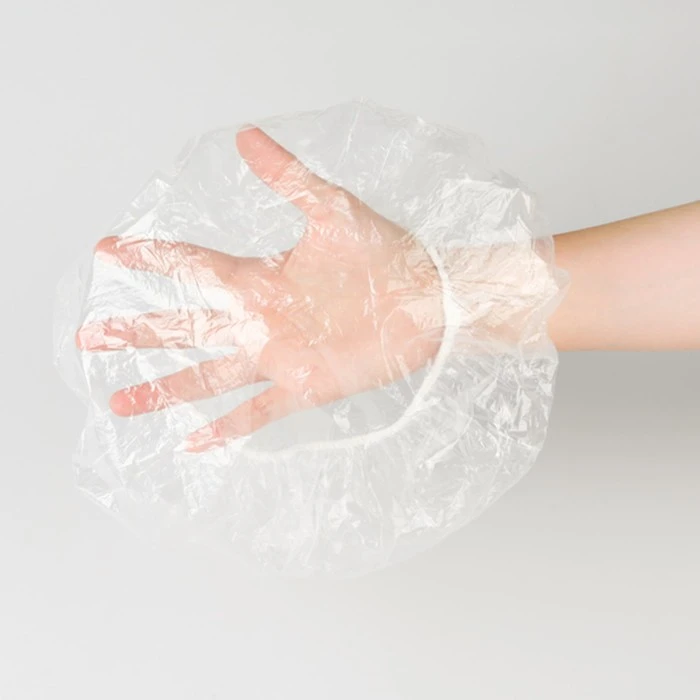

Now, let's compare non - woven hoods with other types of head coverings in terms of drape. Take the Women Shower Cap for example. Shower caps are usually made of plastic or other thin materials. They often have a very limited drape because they are designed to be waterproof and to fit tightly on the head. While they serve their purpose well in the shower, they lack the natural flow and flexibility that non - woven hoods can offer.
Round Nylon Hairnet and Nylon Hairnets are also popular head coverings. Nylon hairnets have a very different drape compared to non - woven hoods. They are more elastic and have a net - like structure, which gives them a more stretchy and less continuous drape. Non - woven hoods, on the other hand, provide a more solid and uniform drape, which can be more suitable for certain professional or formal settings.
In real - world use, the drape of non - woven hoods can have a significant impact. In the food industry, a well - draped non - woven hood not only looks good but also helps ensure that no hair falls into the food. It gives customers confidence in the hygiene standards of the establishment. In the healthcare field, a properly draped non - woven hood is essential for maintaining a sterile environment. It can prevent hair from coming into contact with open wounds or surgical equipment.
For consumers, the drape of non - woven hoods also matters. A hood with a good drape is more comfortable to wear because it doesn't pull or tug on the hair. It also looks better, which is important for those who are conscious about their appearance, even when wearing a head covering.
If you're in the market for non - woven hoods, you might be wondering how to choose ones with the right drape. First, consider the intended use. If it's for a professional setting, you might want a hood with a more structured drape. If it's for personal use or a more casual environment, a softer drape could be more appropriate.
You can also ask for samples from suppliers. This way, you can physically feel the drape of the non - woven hoods and see how they look and perform. Look at how the hood falls when it's placed on a mannequin or when someone tries it on. Pay attention to how it conforms to the head shape without being too tight or too loose.
As a supplier, I'm always happy to help customers find the perfect non - woven hoods with the right drape for their needs. Whether you're a business looking to outfit your employees or an individual looking for a quality head covering, we have a wide range of options to choose from.
If you're interested in discussing your non - woven hood requirements further, feel free to reach out. We can have a chat about the drape, the material, and any other features you might be looking for. We're here to make sure you get the best non - woven hoods that meet your specific needs.
In conclusion, non - woven hoods can have a great drape, and their drape can be customized to suit different applications and preferences. With the right combination of fibers, density, and finishing treatments, non - woven hoods can offer a balance of functionality and aesthetics. So, if you're in the market for head coverings, don't overlook the potential of non - woven hoods.
References
- Textile Materials Handbook: A Guide to Fabrics and Their Applications
- Journal of Non - Woven Fabric Research