

Do non - woven bouffant caps have a low linting property?
Nov 19, 2025
As a supplier of Non-woven Bouffant Caps, I often get asked about the linting properties of our products. In this blog post, I'll delve into the question: Do non-woven bouffant caps have a low linting property? We'll explore the science behind non-woven materials, how it relates to linting, and the implications for various industries that use these caps.
Understanding Non-woven Materials
Non-woven fabrics are engineered materials made from fibers that are bonded together through mechanical, chemical, thermal, or solvent means, rather than being woven or knitted. This manufacturing process gives non-woven materials unique characteristics that set them apart from traditional textiles.
One of the key advantages of non-woven materials is their versatility. They can be designed to have specific properties such as strength, absorbency, and, importantly for our discussion, low linting. The fibers in non-woven fabrics are typically short and randomly arranged, which helps to reduce the likelihood of lint formation.
The Science of Linting
Linting refers to the shedding of small fibers from a fabric surface. This can occur due to friction, abrasion, or simply through normal wear and tear. In industries where cleanliness is crucial, such as healthcare, food processing, and electronics manufacturing, linting can be a significant problem.
Lint particles can contaminate products, cause malfunctions in sensitive equipment, and pose a risk to patient safety in healthcare settings. Therefore, it's essential to use materials with low linting properties to minimize these risks.
Non-woven Bouffant Caps and Linting
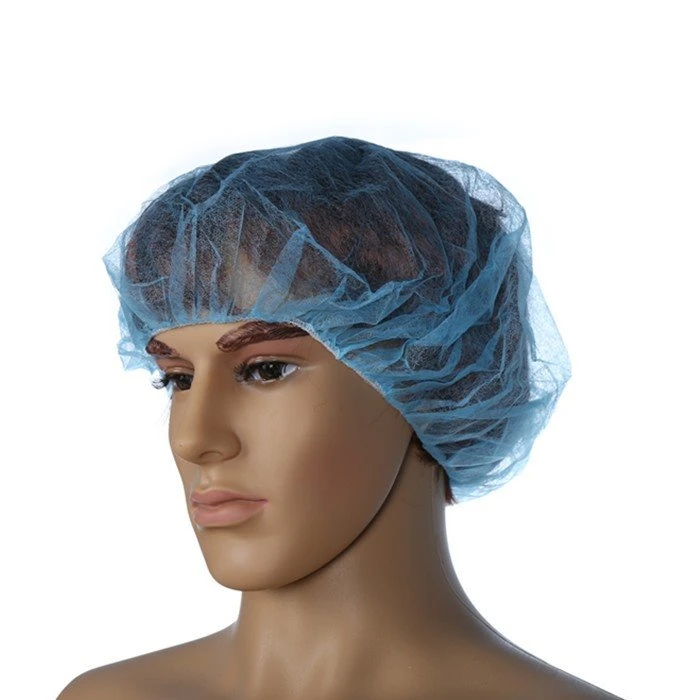
Non-woven bouffant caps are specifically designed to provide a high level of protection while minimizing linting. The manufacturing process of these caps involves careful selection of fibers and bonding techniques to ensure that the fibers remain securely in place.
The short, randomly arranged fibers in non-woven materials are less likely to become loose and shed compared to the long, parallel fibers in woven fabrics. Additionally, the bonding agents used in non-woven manufacturing help to hold the fibers together, further reducing the risk of linting.
Testing and Quality Assurance
At our company, we take linting seriously. We conduct rigorous testing on our non-woven bouffant caps to ensure that they meet the highest standards of quality and performance. Our testing methods include visual inspection, microscopic analysis, and particle counting to detect any signs of linting.
We also work closely with independent laboratories to validate the results of our in-house testing. This commitment to quality assurance gives our customers peace of mind knowing that they are using a product that is reliable and safe.

Applications in Different Industries
Healthcare
In the healthcare industry, non-woven bouffant caps are commonly used by medical staff to prevent hair and lint from falling into surgical wounds or contaminating sterile environments. The low linting property of these caps is crucial to maintaining a clean and safe healthcare setting.
Food Processing
Food processing facilities require strict hygiene standards to prevent contamination of food products. Non-woven bouffant caps help to keep hair and lint out of the production area, ensuring that the food remains safe for consumption.
Electronics Manufacturing
In electronics manufacturing, even the smallest amount of lint can cause problems. Non-woven bouffant caps are used to protect sensitive electronic components from contamination, reducing the risk of product defects and malfunctions.
Comparing with Other Disposable Caps
When compared to other types of disposable caps, such as Non-woven Nurse Cap and Clip Cap and Non-woven Hood, non-woven bouffant caps offer several advantages in terms of linting.
The bouffant design provides a larger coverage area, which helps to prevent hair from escaping and reduces the risk of linting. Additionally, the non-woven material used in bouffant caps is specifically engineered to have low linting properties, making them a preferred choice for industries where cleanliness is a top priority.
Conclusion
In conclusion, non-woven bouffant caps do have a low linting property. The unique characteristics of non-woven materials, combined with careful manufacturing processes and quality assurance measures, make these caps an excellent choice for industries that require a high level of cleanliness and protection.
If you're in the market for non-woven bouffant caps or other disposable caps, we invite you to explore our product range at Non-woven Bouffant Cap. Our team of experts is ready to assist you with your procurement needs and answer any questions you may have. Contact us today to start a discussion about how our products can meet your specific requirements.
References
- ASTM International. (20XX). Standard test methods for determining the linting properties of nonwoven fabrics. ASTM DXXXX-XX.
- ISO. (20XX). International standard for cleanliness requirements in healthcare environments. ISO XXXX:XXXX.
- Smith, J. (20XX). The science of non-woven materials. Journal of Textile Science and Technology, XX(XX), XX-XX.