

Are non - woven hoods easy to dye evenly?
May 20, 2025
Hey there! As a supplier of Non - woven Hoods, I often get asked a bunch of questions about our products. One question that pops up quite a bit is, "Are non - woven hoods easy to dye evenly?" Let's dig into this topic and find out.
First off, let's talk a bit about non - woven materials. Non - woven fabrics are made by bonding or entangling fibers together rather than weaving them like traditional textiles. This manufacturing process gives non - woven materials some unique properties. They're usually lightweight, breathable, and cost - effective. And of course, they're the main ingredient in our Non-woven Hood.

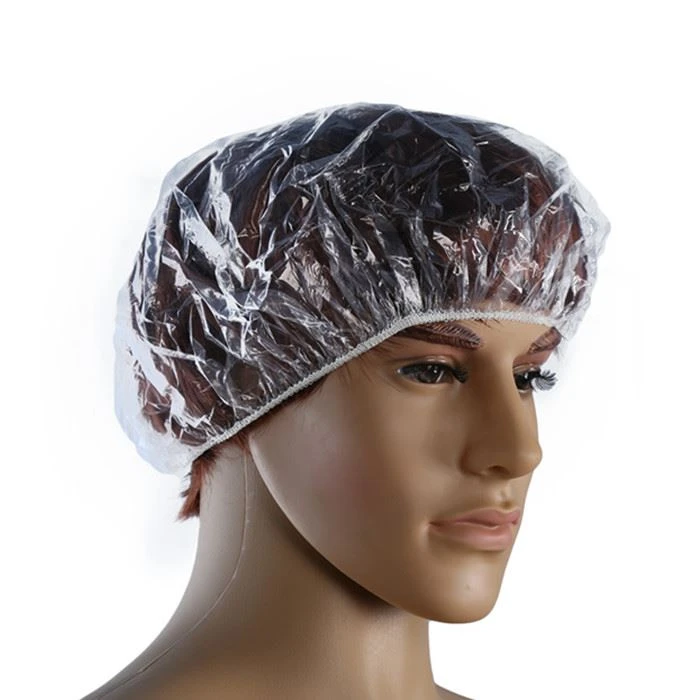
Now, when it comes to dyeing, the ease of achieving an even color depends on several factors. One of the most important factors is the type of non - woven material. There are different kinds of non - woven fabrics, such as spunbond, meltblown, and needle - punched. Each type has a different fiber structure and surface characteristics, which can affect how the dye is absorbed.
Spunbond non - woven materials, for example, have relatively long and continuous fibers. These fibers are laid down in a more or less parallel pattern during the manufacturing process. This structure can make it a bit easier for the dye to penetrate evenly compared to some other types. The long fibers provide a more consistent surface for the dye molecules to attach to.
On the other hand, meltblown non - woven fabrics are made up of very fine, randomly oriented fibers. While these fabrics are great for filtration and other applications, the random fiber arrangement can sometimes make it a bit trickier to get an even dye. The dye might get trapped in some areas more than others, leading to uneven color distribution.
Another factor that plays a role in even dyeing is the dyeing method. There are several ways to dye non - woven hoods, and each has its pros and cons.
One common method is immersion dyeing. In this method, the non - woven hoods are submerged in a dye bath. The key to getting an even color with immersion dyeing is to make sure the hoods are fully and evenly submerged. Stirring the dye bath gently can help ensure that the dye is distributed evenly around the hoods. However, if the hoods are bunched up or not moving freely in the bath, some parts might not get enough dye, resulting in uneven color.
Another option is spray dyeing. Spray dyeing can be a faster method, especially for large - scale production. But it also requires careful control. The spray nozzles need to be adjusted properly to ensure that the dye is applied evenly across the surface of the non - woven hood. If the spray pattern is uneven or if the hoods are not passed under the spray nozzles at a consistent speed, you might end up with patchy color.
The quality of the dye itself also matters. High - quality dyes are formulated to have good dispersion and affinity for the non - woven fibers. They're more likely to spread evenly and bond well with the fibers, resulting in a more consistent color. Cheaper dyes, on the other hand, might not work as well. They could clump together or not adhere properly to the fibers, leading to uneven dyeing.
Pre - treatment of the non - woven hoods can also improve the chances of even dyeing. For example, treating the hoods with a wetting agent can help the dye spread more easily across the surface of the fabric. This is because the wetting agent reduces the surface tension of the fabric, allowing the dye to penetrate more uniformly.
Now, let's talk about some real - world experiences. In our production process, we've found that with the right combination of non - woven material, dyeing method, and dye quality, we can achieve fairly even dyeing on our non - woven hoods. We use high - quality spunbond non - woven materials most of the time because they seem to work best for dyeing. And we've fine - tuned our immersion dyeing process to ensure that the hoods are properly agitated in the dye bath.
But it's not always a walk in the park. Sometimes, we do encounter some challenges. For instance, if the dye bath temperature is not controlled correctly, it can affect the dyeing process. If the temperature is too high, the dye might react too quickly and form uneven patches. If it's too low, the dye might not penetrate the fibers properly.
We also offer a variety of other disposable caps, like Women Shower Cap and Non-woven Astronaut Cap. While the dyeing principles are similar for these products, the different shapes and sizes can add an extra layer of complexity. For example, the shape of the Women Shower Cap might make it a bit more difficult to ensure even dyeing in some areas compared to a simple non - woven hood.
So, to answer the question, "Are non - woven hoods easy to dye evenly?" Well, it's not a straightforward yes or no. It depends on a lot of factors, including the type of non - woven material, the dyeing method, the quality of the dye, and the pre - treatment steps. With the right approach and attention to detail, it's definitely possible to achieve an even color on non - woven hoods.
If you're in the market for non - woven hoods or any of our other disposable caps and have specific requirements regarding color, we'd love to chat with you. Whether you need a custom color for a special event or a consistent color for your brand, we can work with you to find the best solution. Just reach out, and we'll be happy to discuss your needs and how we can meet them.
References
- Textile Dyeing Handbook, Third Edition by Horst H. Kittel
- Nonwovens: Technology, Materials, and Applications by John A. Mills