

Are disposable shoe covers resistant to oil?
Jul 22, 2025
In various industrial and commercial settings, the question of whether disposable shoe covers are resistant to oil is of significant importance. As a supplier of disposable shoe covers, I've encountered numerous inquiries regarding the oil - resistance capabilities of our products. In this blog, I'll delve into the science behind oil resistance in disposable shoe covers, discuss different materials used, and provide insights based on real - world applications.
Understanding Oil Resistance
Oil resistance refers to a material's ability to prevent the penetration and degradation caused by oils. Oils can vary widely in their chemical composition, from light mineral oils to heavy lubricating oils and animal or vegetable fats. When a shoe cover comes into contact with oil, it should ideally maintain its integrity, prevent the oil from seeping through to the wearer's shoes, and not break down or lose its strength due to the oil's presence.
Materials Used in Disposable Shoe Covers
1. Polyethylene (PE) and Chlorinated Polyethylene (CPE)
PE and CPE are commonly used materials in disposable shoe covers. PE CPE Boot Cover are known for their excellent moisture - resistance and general durability. PE is a thermoplastic polymer that provides a basic level of protection against many types of liquids, including some oils.
CPE, on the other hand, is a modified form of polyethylene. The addition of chlorine atoms to the polyethylene chain enhances its chemical resistance. CPE shoe covers offer better oil resistance compared to pure PE covers. They can withstand exposure to a wider range of oils, including some industrial lubricants and light - to - medium - viscosity oils. The chemical structure of CPE makes it less likely to swell or dissolve when in contact with oil, maintaining its shape and protective properties.
2. Non - woven Materials
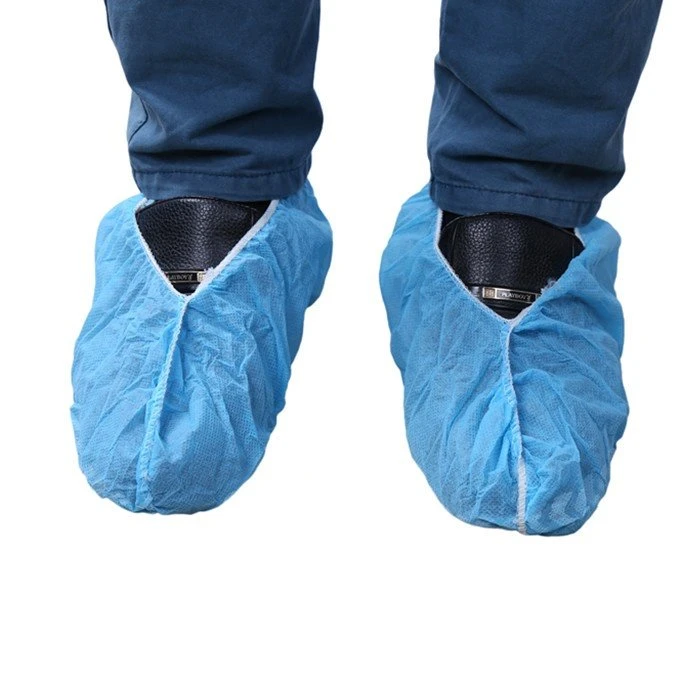
Disposable Non - woven Shoe Covers and Non - Woven Shoe Cover are also popular choices. Non - woven fabrics are made by bonding or interlocking fibers together, rather than weaving them. The oil - resistance of non - woven shoe covers depends on the type of fibers used and any additional treatments applied.
Some non - woven materials, such as polypropylene non - woven, have a certain level of hydrophobicity, which means they can repel water and some oils to an extent. However, their oil - resistance is generally lower compared to PE or CPE covers. To improve oil - resistance, non - woven shoe covers can be treated with special coatings or finishes. These treatments create a barrier on the surface of the fabric, preventing oil from penetrating the fibers.
Testing Oil Resistance
To determine the oil - resistance of disposable shoe covers, various testing methods are employed. One common method is the ASTM F1670 standard, which measures the resistance of protective clothing materials to synthetic blood penetration under low - pressure conditions. While this standard is primarily for blood - borne pathogen protection, it can also provide some insights into a material's ability to resist liquid penetration, including oils.
Another relevant test is the ASTM F1671 standard, which evaluates the resistance of materials to penetration by blood - borne pathogens using Phi - X174 bacteriophage as a surrogate. Similar to the F1670 test, it can be used to gauge a shoe cover's performance against oil penetration.
In addition to these standardized tests, suppliers often conduct in - house tests using different types of oils. These tests involve applying a specific amount of oil to the shoe cover and observing the time it takes for the oil to penetrate the material or cause any visible damage to the cover.

Real - World Applications
Industrial Settings
In industrial environments such as manufacturing plants, automotive workshops, and oil refineries, oil - resistant disposable shoe covers are essential. Workers in these settings are constantly exposed to various oils, including hydraulic oils, engine oils, and lubricants. PE or CPE shoe covers are often the preferred choice due to their high level of oil - resistance. They provide reliable protection for workers' shoes, preventing oil stains and potential slips caused by oil on the soles.
Food Processing
In the food processing industry, disposable shoe covers are used to maintain hygiene standards. While the oils encountered in food processing are mainly animal and vegetable fats, they can still pose a risk of contamination. Non - woven shoe covers with appropriate oil - resistant treatments are commonly used in this industry. They not only prevent the spread of fats and oils but also meet the strict hygiene requirements of food processing facilities.
Limitations of Oil - Resistant Shoe Covers
It's important to note that no disposable shoe cover offers 100% oil - resistance. Even the most oil - resistant materials have their limitations. Over time, continuous exposure to oil can cause the material to degrade, reducing its protective capabilities. High - viscosity oils or oils with strong chemical components may also penetrate the shoe cover more easily than lighter oils.
In addition, the fit of the shoe cover is crucial for effective oil - protection. A poorly fitting shoe cover may allow oil to seep in through the openings, regardless of the material's oil - resistance properties.
Conclusion
In conclusion, the oil - resistance of disposable shoe covers depends on the material used and any additional treatments applied. PE and CPE shoe covers generally offer better oil - resistance compared to non - woven shoe covers, but non - woven covers can be treated to improve their performance. Different industries have different requirements for oil - resistant shoe covers, and choosing the right type of cover is essential for ensuring worker safety and hygiene.
If you're in need of high - quality disposable shoe covers with the appropriate oil - resistance for your specific application, I encourage you to reach out. We, as a reliable supplier of disposable shoe covers, can provide you with detailed information about our products and help you select the most suitable shoe covers for your needs. Contact us to start a procurement discussion and find the perfect solution for your business.
References
- ASTM International. "Standard Test Method for Resistance of Materials Used in Protective Clothing to Penetration by Synthetic Blood Under Low - Pressure Conditions (ASTM F1670)."
- ASTM International. "Standard Test Method for Resistance of Materials Used in Protective Clothing to Penetration by Blood - Borne Pathogens Using Phi - X174 Bacteriophage as a Surrogate (ASTM F1671)."